

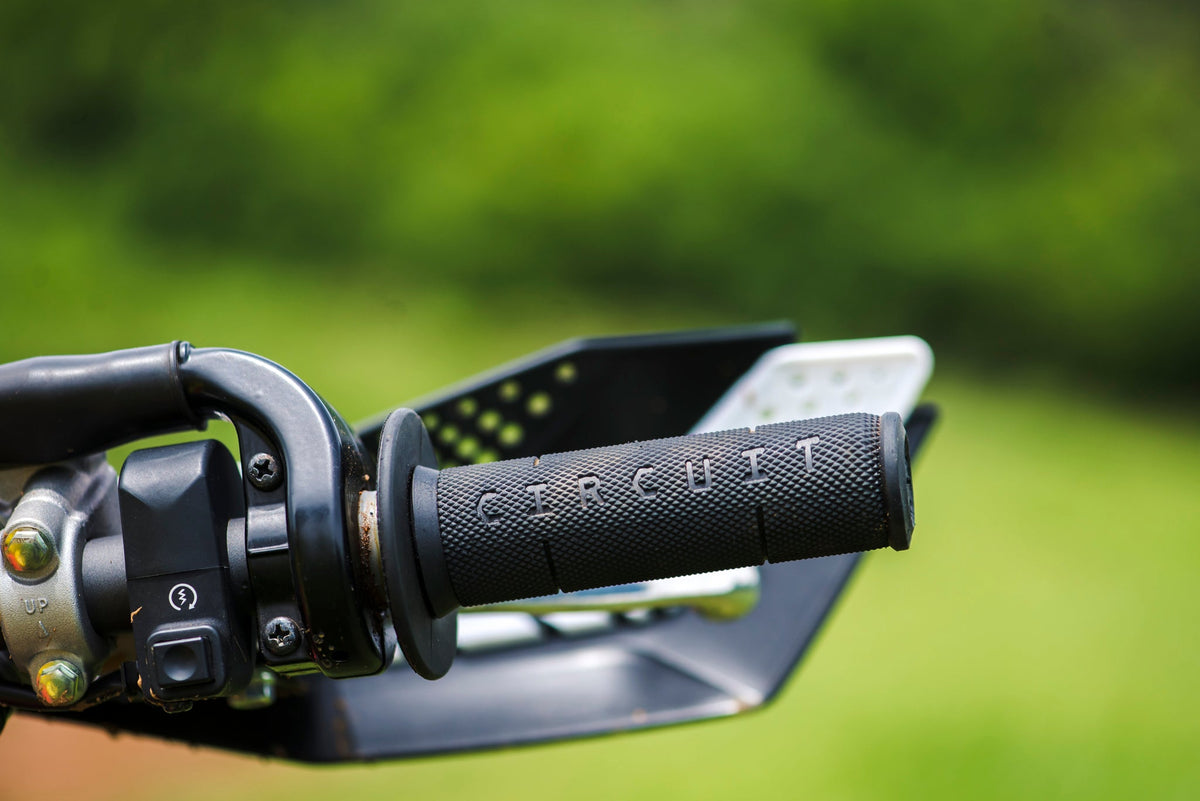
The riding experience goes far beyond engine power or suspension. Some components can make a significant difference in comfort, control and safety, and motorcycle grips are a great example.
Present during every acceleration, braking and change of Direction, the grip is the main point of contact between the rider and the motorcycle. That is why choosing the right motorcycle grip for your riding style can provide greater confidence, reduce hand fatigue and make every kilometre much more enjoyable.
Whether you use your motorcycle for daily commuting, long-distance trips, or tackling trails and competitions, investing in the right grip is a simple way to improve your riding experience without requiring major modifications.
In this guide, you will learn what a motorcycle grip is, the main types available, how materials influence performance, when it is time to replace your grips, and what to consider when choosing the ideal model for your motorcycle.
What Is a Motorcycle Grip and What Is Its Function?
The grip is the covering installed on the ends of the handlebars, exactly where the rider places their hands throughout the ride. On the right side, it also surrounds the throttle tube, making it a fundamental part of the interaction between the rider and the motorcycle.
Although it is a relatively simple component, its function goes far beyond comfort. It directly influences how the controls are operated, helping maintain firmness, precision and control in different riding conditions.
A worn or unsuitable grip can make riding more tiring and reduce the rider’s grip on the handlebars, especially in rain, mud, dust or during long periods of use.
On the other hand, when the model is suited to the type of riding, the rider can benefit from:
better grip on the handlebars;
greater comfort during long rides;
reduced hand and forearm fatigue;
greater precision during acceleration and braking;
greater control and confidence.
It is precisely because the grip is involved in every moment of the ride that it deserves attention when equipping a motorcycle.
Why Does Grip Choice Make Such a Difference?
Riders often invest in various accessories to improve motorcycle performance but end up overlooking one of the components they use most while riding.
In addition, different riding disciplines require specific characteristics . A rider who uses a motorcycle primarily for urban commuting has different needs from one who rides trails, competes in motocross or takes long-distance trips.
That is why, before choosing a model based solely on appearance or price, it is worth understanding which characteristics really make a difference in everyday use.

What Should a Good Motorcycle Grip Offer?
Not all grips provide the same riding experience. The material, texture, shape and construction directly influence comfort and performance while riding.
When comparing different models, several factors deserve attention.
Grip and Traction
Grip refers to how effectively a motorcycle grip keeps the rider’s hands securely in position on the handlebars.
The better the grip, the less effort is required to maintain control of the motorcycle, especially during acceleration, braking and cornering.
This becomes even more important in challenging conditions such as rain, mud and dust.
Want to better understand how grip affects riding? Check out our content on Motorcycle Grip: Why Is It Important?
Comfort
Long rides and daily use can lead to hand fatigue, partly due to the motorcycle’s natural vibrations.A grip designed for comfort helps distribute pressure across the hands more evenly, reducing fatigue and making the riding experience more enjoyable.
Control
As the grip is the main point of contact with the handlebars, it directly affects control precision.
The right combination of material, texture and ergonomics can enhance the rider’s control and confidence.
Resistance and Durability
In addition to providing comfort, a good grip needs to withstand wear caused by constant use, exposure to sunlight and rain, and the natural friction of the hands.
Models made from quality materials can maintain their performance over time, providing greater consistency throughout their service life.

Main Types of Motorcycle Grips
There are different types of grips, and each one has been developed to meet specific needs.
Understanding these differences helps you choose the model that best suits your riding style.
Traditional Grips
Traditional grips are the most widely used type on the market. They are installed directly onto the handlebars using specific grip glue or compressed air and are available in different materials, textures and levels of traction.
Their main advantage is versatility, making them suitable for everyone from daily commuters to competitive riders.
If you want to compare the different models available, check out the Circuit grip category, where you can find options for different riding styles.
Lock-On Grips
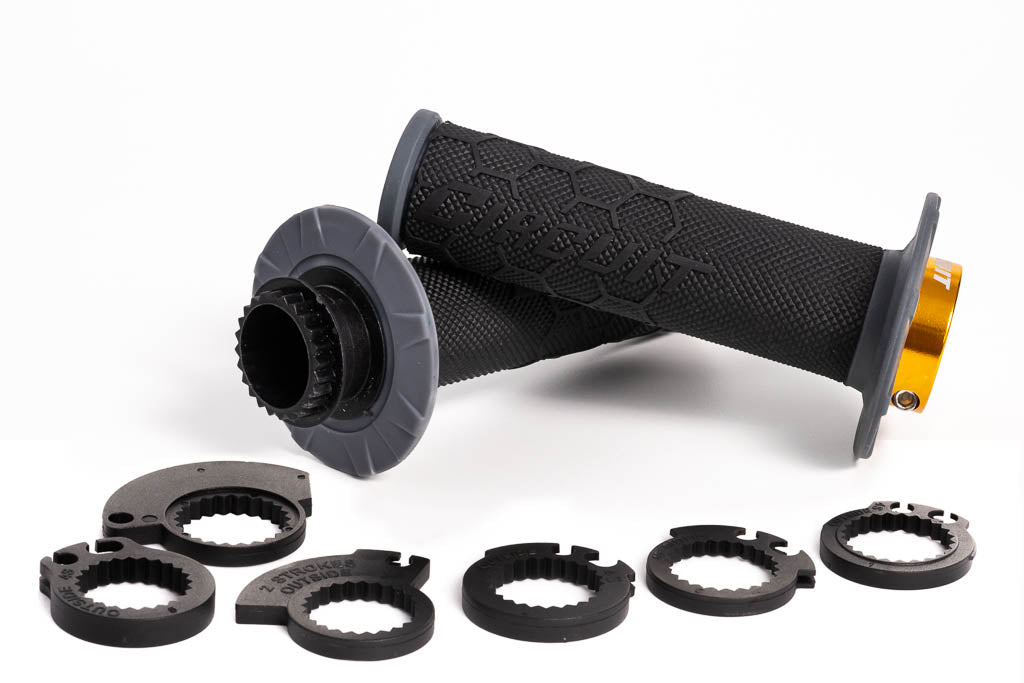
Lock-On grips use a mechanical locking system that eliminates the need for glue during installation.
In addition to making installation and removal easier, this system also helps prevent the grip from rotating during riding, making installation, removal and maintenance more convenien.
his system is widely used in motocross and enduro applications.
Want to learn more about this system? Check out the complete article about the Kira Lock-On Grip and discover the advantages of this type of mounting system.
Grips for Urban Riding
Riders who use their motorcycles every day typically look for comfort, durability and a pleasant feel throughout their daily commute.
In this scenario, softer compounds help absorb small vibrations and reduce hand fatigue throughout the day.
For this type of rider, there are product lines designed to balance comfort and durability, such as Everyday, ideal for those looking for a more comfortable experience in their daily routine.
Grips for Motocross, Enduro and Trail Riding
In off-road riding, the demands are completely different.
Mud, sand, rocks, roots and constant impacts require a grip capable of maintaining a high level of traction even in the most challenging conditions.
For this reason, motocross, enduro and trail riders generally choose models specifically developed for these disciplines, prioritising grip, control and durability.
Lines such as Racing, Electra Racing, Revolution and Kira Lock-On were developed to meet these needs, allowing each rider to choose the model that best suits their riding style.
Grips for Adventure, Touring and Big Trail Riding
Riders covering long distances or switching between paved and unpaved roads need a grip that provides comfort without compromising motorcycle control.
In these situations, the goal is to reduce hand fatigue during hours of riding while maintaining good traction across different types of terrain.
Models such as Interlagos are an interesting option for riders looking for this balance between comfort, durability and control.
Grips for Scooters
For scooters, the focus is generally on practicality and comfort for urban use.
As these models are frequently used for daily commuting, an ergonomic grip helps make riding more comfortable and enjoyable while also contributing to motorcycle control in traffic.
The Silverstone line was developed for this type of use, combining comfort, durability and a finish that complements the motorcycle’s design.

What Are the Main Grip Materials?
Although many people choose a grip based on appearance or price, the material used in its construction is one of the factors that most influences the riding experience. It determines characteristics such as traction (grip), comfort, vibration absorption, wear resistance and even product durability.
In practice, two models with the same design can provide completely different riding sensations simply because they use different compounds. That is why understanding the main materials is essential when choosing a motorcycle grip that truly suits your riding style.
TPE (Thermoplastic Elastomer): More Grip and Performance
TPE (Thermoplastic Elastomer) is a versatile material commonly used in grips designed for sport and off-road riding.
Its main advantage is its high level of traction, allowing riders to keep their hands firmly positioned on the handlebars even in more demanding conditions such as mud, dust, rain or uneven terrain.
Because it provides greater motorcycle control, this type of compound is widely used by motocross, enduro and trail riders, where precision and safety make all the difference.
Its main benefits include:
high level of grip;
excellent motorcycle control;
greater wear resistance;
excellent performance in challenging conditions.
If you want to better understand how grip affects riding, it is also worth checking out our article on Motorcycle Grip: Why Is It Important?
PVC: Durability and Practicality for Everyday Use
PVC (Polyvinyl Chloride) is a material used in some grip models because it offers good wear resistance and easy maintenance.
Its characteristics allow the grip to withstand continuous use while making it easier to clean and helping it retain its appearance for longer. Depending on the formulation, PVC can also provide a surface with good traction, contributing to motorcycle control.
By combining durability, practicality and good value, PVC grips are an interesting option for riders who use their motorcycles every day and are looking for long-lasting performance without sacrificing functionality.
How Does the Material Affect the Riding Experience?
In practice, the grip material directly affects how the motorcycle feels to the rider.
A softer grip tends to absorb vibrations more effectively, reducing hand fatigue during long rides. Compounds with greater grip, on the other hand, can reduce the amount of force needed to maintain a secure hold on the handlebars, providing greater control during acceleration, braking and cornering.
That is why there is no single material considered the best for every situation. The ideal choice depends on how the motorcycle is used and on the characteristics you value most when riding.
Riders who mainly use their motorcycles for urban commuting tend to prioritise comfort and ergonomics. Motocross, enduro and trail riders, on the other hand, generally prefer compounds with greater grip and durability to handle more demanding conditions. For touring and long-distance riding, finding a balance between comfort, traction and durability makes all the difference.
Before choosing a new motorcycle grip, it is worth considering not only the product's design or appearance but also the material used in its construction. This choice can directly affect comfort, safety and motorcycle control with every kilometre ridden.

How Does Riding Style Influence Grip Choice?
After understanding how materials, compounds and grip affect the riding experience, it becomes easier to see that there is no single ideal grip for every rider.
The best choice depends on how the motorcycle is used and the conditions encountered on a daily basis. While some riders look for greater comfort during long periods of riding, others need maximum grip for challenging terrain or performance-focused riding.
That is why, before choosing a grip, it is worth considering a few points:
How often do you use your motorcycle?
Is your riding primarily urban, on-road or off-road?
Do you usually ride for long periods?
Do you frequently ride in rain, mud, dust or uneven terrain?
What matters most to you: comfort, traction or durability?
Answering these questions helps identify which characteristics should be prioritised when making a purchase.
Regardless of the discipline, choosing a grip developed for your type of use contributes to a more comfortable, safer and more efficient riding experience.
Traditional or Lock-On Grips: Which Should You Choose?
In addition to material and texture, another important factor is the grip mounting system.
Traditional grips are installed using specific grip glue or compressed air and remain an excellent option for those looking for good value and a wide range of models.
Lock-On grips, on the other hand, use a mechanical locking system that eliminates the need for glue. This makes installation faster and simplifies future replacements, while also reducing the risk of the grip rotating during riding.
This system is highly valued by riders who practise motocross, enduro or perform frequent maintenance, but it can also be an excellent choice for any rider looking for greater convenience.
If you want to learn more about this technology and understand when it is worth choosing, check out our article on the Kira Lock-On Grip, where we explain how the system works, its advantages and the key features of this type of product.
How to Choose the Best Grip for Your Motorcycle
After learning about the different types of grips, understanding how materials influence the riding experience and discovering the importance of grip, it becomes easier to make an informed choice.
The best grip is not necessarily the most expensive or the most technologically advanced one, but rather the one that meets your needs. The type of motorcycle, frequency of use, terrain covered and riding style are all factors that should be considered before making a purchase.
To make this decision easier, it is worth answering a few questions:
Where do I ride my motorcycle most often??
Do I usually take short rides or long trips?
Do I regularly ride in rain, mud or dust?
Do I prioritise comfort, traction or durability?
Do I prefer traditional installation or a Lock-On system?
By considering these factors, it becomes much easier to find a grip that provides comfort, control and safety while riding.
When Is It Time to Replace Your Grip?
Even though it is a durable component, a grip experiences wear with use and can lose some of its characteristics over time.
Some signs indicate that it is time for a replacement:
loss of traction;
smooth or slippery surface;
cracks or drying;
uneven wear;
increased vibration or discomfort in the hands.
grip rotating on the handlebars.
Replacing the grip at the right time helps maintain comfort and motorcycle control while also contributing to a safer riding experience.
If you still have questions about the process, check out our article on how to replace a motorcycle grip, with a step-by-step guide to performing the replacement correctly.

How Do You Install a Grip?
Installation varies depending on the model selected.
Traditional grips normally use specific grip glue to ensure secure installation, while Lock-On versions feature a mechanical locking system that simplifies installation and makes future replacements easier.
Regardless of the model, following the manufacturer's recommendations is essential to ensure the best performance and extend the product's service life.
Discover the Circuit Grip Range
Throughout this guide, we have shown that different riding styles require specific characteristics. With this in mind, Circuit offers a complete range of grips designed for a variety of riding styles, from daily commuting to trail riding, competition and long-distance travel.
If you are looking for a solution for urban use, it is worth checking out the Everyday range. For off-road disciplines such as motocross and enduro, the Racing, Electra Racing, Revolution, Trail and Kira Lock-On lines offer different options in terms of grip, comfort and durability. For those looking for comfort during touring and on-road use, Interlagos and Silverstone are alternatives developed for these riding profiles.
You can compare all the models by accessing the Circuit grip category and choose the option that best suits your motorcycle and riding style.
Conclusion
Choosing the ideal grip goes far beyond aesthetics. This component directly influences comfort, control and safety while riding, making every acceleration, braking manoeuvre and change of direction more precise and comfortable.
By understanding the differences between grip types, materials, installation systems and grip levels, it becomes easier to identify which model best meets your needs and riding style.
We hope this guide has helped you make a more informed decision. And if you want to explore a specific topic in greater depth, take the opportunity to explore our related content and discover the complete range of Circuit grips developed for different riding disciplines and rider profiles.

Leave a comment
This site is protected by hCaptcha and the hCaptcha Privacy Policy and Terms of Service apply.